What is AHAGAI and why am I doing this?
I did a brief podcast about what this is and what to expect [see below]. But in a nutshell, I’m trying to distill thousands of years of knowledge across cultures and time periods from across the world, to the most actionable points that can be used to accelerate personal and organizational growth. I’m using tools and techniques leveraging Generative AI to make this happen.
AHAGAI stands for Accelerated Habit Adoption with Generative AI
It is my framework for:
- Transforming how I approach personal growth in just 30 days.
- Researching, analyzing, and curating insights from multiple domains.
- Developing sustainable strategies to integrate these insights into daily life.
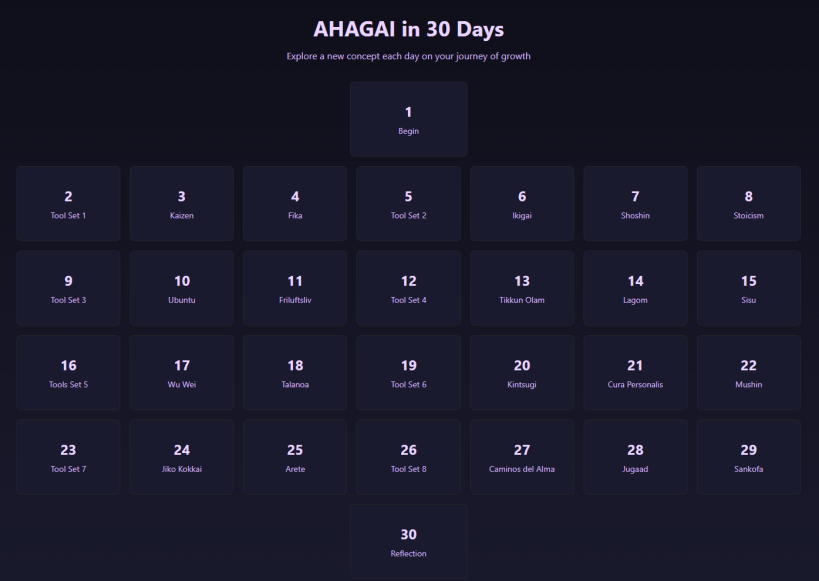
The first thing I did was do identify the top 100 books on self-improvement, across all knowledge domains, time periods and cultures. Then I distilled the concepts outlined in these books to their core tenets. Then I researched where they came from (i.e.; philosophy, strategy, techniques, etc.). I then set a time constraint for myself to 30 days for integrating them. I have 4 weeks, each with 5 days of different areas. So that’s 20 focus days. Then there are 2 days a week that I focus on integrating various AI frameworks, tools, and methods into my workflow. The reason for that is that I will use these AI tools to research and implement the concepts I am integrating, thus accelerating the process.
The last 2 days out of 30, are the 1st and last days.
- The first is about making oneself open to change and having the deliberate intention set for limitless transformation. No guardrails or constraints set.
- The last day is for reflection on the process, the learnings, what was the good, the bad, what can be improved, and what can be shared with others.
I used an app that I made with a GenAI no-code platform called co.dev to structure the approach. Have a look at that app here.
Recap:
If you want to have a look at how I started this process, have a look at the first 3 days of work that I did in the last post here. To finish of the first week, I did the following:
Day 4: Fika
Fika, a Swedish concept, refers to a coffee break that emphasizes mindfulness and social connection. It encourages taking a pause from work to enjoy coffee or tea, often accompanied by pastries, while engaging in conversation with colleagues or friends. This practice promotes relaxation, enhances productivity, and fosters a sense of community in the workplace. Fika is not just about the beverage; it’s about creating a moment to recharge and reflect, contributing to overall well-being.
Here are some strategies to implement Fika (mindful breaks) in your daily life:
- Schedule Breaks: Set specific times during the day for your Fika breaks, just like you would for meetings.
- Create a Ritual: Establish a consistent routine, such as having coffee or tea at a certain time, to signal the start of your break.
- Disconnect: Put away devices and focus on the moment. Avoid screens to enhance mindfulness.
- Mindful Eating: Enjoy a small snack or treat during your break, savoring each bite and paying attention to flavors and textures.
- Nature Connection: If possible, take your break outdoors to enjoy fresh air and natural surroundings.
- Social Interaction: Invite colleagues or friends to join you for Fika, fostering connection and conversation.
- Breathing Exercises: Incorporate deep breathing or meditation during your break to center yourself.
- Reflective Journaling: Use part of your break for journaling thoughts or feelings, promoting self-awareness.
- Short Walks: Take a brief walk to clear your mind and refresh your energy.
- Mindful Listening: If with others, practice active listening, focusing fully on the conversation without distractions.
Incorporating these strategies can help you make the most of your Fika breaks and enhance overall well-being.”
- 1. Schedule Breaks: Actionable Task: Block out 15-minute Fika breaks in your calendar at 10 AM and 3 PM daily.
- 2. Create a Ritual: Actionable Task: Choose a specific beverage (like herbal tea) to enjoy at the start of each break, making it a daily habit.
- 3. Disconnect: Actionable Task: Turn off notifications and put away your phone during Fika to focus on the moment.
- 4. Mindful Eating: Actionable Task: Prepare a small, healthy snack (like fruit or nuts) to enjoy mindfully, paying attention to taste and texture.
- 5. Nature Connection: Actionable Task: Spend at least one Fika break outside, walking in a park or sitting in a garden, if available.
- 6. Social Interaction: Actionable Task: Invite a colleague or friend to join you for Fika once a week, fostering connection.
- 7. Breathing Exercises: Actionable Task: Spend 5 minutes during your break practicing deep breathing exercises—inhale for 4 counts, hold for 4, exhale for 4.
- 8. Reflective Journaling: Actionable Task: Dedicate 5 minutes of one break each day to jot down thoughts or feelings in a journal.
- 9. Short Walks: Actionable Task: Take a 10-minute walk during one of your breaks to refresh your mind and body.
- 10. Mindful Listening: Actionable Task: During social Fika, practice active listening by summarizing what the other person says before responding.
Now how does this relate to Generative AI, when Fika seems like a means to disconnect with technology and connect with people. Well I worked with some image generation models and LLMs to figure this out. The outcome was a book called “From Beans to Bits: FIKA and the Generative AI Revolution“. The book is open-source and fully available on GitHub in HTML, markdown, and PDF.

I found that with Generative AI, its not as much about creating an outcome, than integrating it into your life. Its the tool to create balance and get time back to focus on the important things that have meaning to you. Making new routines, being creative, and thinking in new ways, not just being more productive or working more.
Day 6: Ikigai
Ikigai is a Japanese concept that translates to “”a reason for being.”” It represents the intersection of four key elements:
- What you love (your passions)
- What you are good at (your skills)
- What the world needs (societal contributions)
- What you can be paid for (economic viability)
Finding your ikigai involves identifying activities that fulfill all four areas, leading to a sense of purpose and fulfillment in life. It emphasizes balance and harmony, encouraging individuals to pursue their passions while also considering practicality and societal impact. The concept is often associated with longevity and happiness, particularly in Japanese culture
"Implementing ikigai in daily life involves finding balance and fulfillment through four key elements: what you love, what you are good at, what the world needs, and what you can be paid for. Here are some strategies:
-
Self-Reflection:
- Regularly assess your passions, skills, values, and what you believe the world needs.
- Keep a journal to explore your thoughts and feelings about these elements.
-
Set Clear Goals:
- Define short-term and long-term goals that align with your ikigai.
- Break these goals into manageable steps and track your progress.
-
Pursue Passions:
- Dedicate time to activities that you love, whether as hobbies or side projects.
- Engage in volunteer work that resonates with your values and interests.
-
Develop Skills:
- Invest in learning and improving skills that align with your passions and potential career opportunities.
- Take courses, attend workshops, or seek mentorship.
-
Seek Opportunities:
- Look for ways to incorporate your ikigai into your current job or consider a career shift that aligns better with your findings.
- Network with like-minded individuals who share similar values and goals.
-
Balance Work and Life:
- Prioritize work-life balance to ensure you have time for personal interests and relationships.
- Practice mindfulness or meditation to stay grounded and focused.
-
Stay Open-Minded:
- Be willing to adapt and change your path as you discover new interests or opportunities.
- Embrace lifelong learning and remain curious about the world around you.
-
Reflect and Adjust:
- Regularly revisit your ikigai framework to see if it still resonates with you.
- Make adjustments as necessary to stay aligned with your evolving self.
By incorporating these strategies into your daily routine, you can work towards living a life that embodies your ikigai. Below is list of actionable steps for each, along with how to use GenAI to assist.
1. Self-Reflection
- Strategy: Daily Journaling
- Actionable Task: Spend 10 minutes each morning writing about what you love, your skills, your values, and what you believe the world needs. Use prompts like “What made me happy yesterday?” or “What skills did I use today?”
- GenAI Assistance:
- Generate personalized daily prompts based on past reflections and goals.
- Summarize journal entries to identify recurring themes or insights.
- Provide reflective questions to deepen self-awareness.
2. Set Clear Goals
- Strategy: SMART Goals Framework
- Actionable Task: Each week, set one short-term (weekly) and one long-term (monthly) goal related to your ikigai. Write them down and review progress every Sunday.
- GenAI Assistance:
- Help formulate SMART goals by refining your ideas into specific, measurable, and achievable targets.
- Track your goals weekly and provide progress updates or adjustments.
- Suggest strategies for achieving long-term objectives.
3. Pursue Passions
- Strategy: Passion Project Time
- Actionable Task: Allocate 30 minutes each day to work on a hobby or passion project. This could be painting, writing, coding, etc. Schedule it into your calendar.
- GenAI Assistance:
- Generate creative ideas or project plans tailored to your interests.
- Provide step-by-step guidance for projects (e.g., writing prompts, coding tutorials).
- Offer inspiration or motivation by curating relevant success stories or examples.
4. Develop Skills
- Strategy: Continuous Learning
- Actionable Task: Dedicate 20 minutes daily to learn something new related to your skills or career. This could include online courses, tutorials, or reading relevant books/articles.
- GenAI Assistance:
- Recommend curated learning resources such as articles, courses, or videos.
- Summarize complex materials for quicker understanding.
- Provide quizzes or practice exercises to reinforce learning.
5. Seek Opportunities
- Strategy: Networking and Exploration
- Actionable Task: Reach out to one new person each week in your field of interest or attend a local meet-up/event. Schedule a coffee chat or informational interview.
- GenAI Assistance:
- Generate outreach email or LinkedIn message templates.
- Research and suggest potential connections in your industry.
- Provide icebreaker questions or discussion topics for meetings.
6. Balance Work and Life
- Strategy: Time Blocking
- Actionable Task: Create a daily schedule that includes dedicated time for work, personal interests, and relaxation. Ensure you have at least one hour of personal time each day.
- GenAI Assistance:
- Help create a balanced daily schedule based on your priorities.
- Suggest time-management techniques or adjustments to improve efficiency.
- Provide reminders to take breaks and maintain balance.
7. Stay Open-Minded
- Strategy: Curiosity Practice
- Actionable Task: Each day, ask yourself one new question about something you’re curious about, whether it’s a topic related to work or personal interest. Research the answer or discuss it with someone.
- GenAI Assistance:
- Answer daily curiosity-driven questions or provide concise explanations.
- Suggest related resources or deeper research topics.
- Spark curiosity by presenting trending or intriguing ideas relevant to your interests.
8. Reflect and Adjust
- Strategy: Weekly Review
- Actionable Task: Every Sunday, spend 15 minutes reviewing your journal entries and goals. Reflect on what’s working, what needs adjustment, and how your ikigai may have shifted.
- GenAI Assistance:
- Analyze journal entries and goal progress to highlight patterns and insights.
- Suggest adjustments or new strategies based on what’s working or not.
- Provide reflection prompts to assess alignment with your ikigai.
Summary of Daily Actions with GenAI Assistance
| Task | GenAI Support |
|---|---|
| Morning Journaling | Generate prompts, summarize entries, identify recurring themes. |
| Set SMART Goals | Help refine goals, track progress, and provide strategies for success. |
| Passion Project Time | Provide ideas, plans, tutorials, and creative inspiration. |
| Skill Development | Curate learning materials, summarize content, and create quizzes. |
| Networking | Generate outreach templates, suggest connections, and provide icebreakers. |
| Time Blocking | Create schedules, suggest improvements, and provide balance reminders. |
| Curiosity Practice | Answer questions, suggest resources, and spark curiosity with ideas. |
| Weekly Review | Analyze progress, suggest adjustments, and provide reflective prompts. |
The first week is still not done. Like I said in my last post, this is a vast undertaking, and fitting it into a my daily life, as well as research, implementation and documentation, is quite daunting. However, the process of integrating these learnings into my life is what will make the heavy lifting easier. The only way out is to go further in. Learn what will benefit me, apply it, evolve and upgrade.
About the author

With 25 years of industry experience, Daemon Behr is a seasoned expert, having served global financial institutions, large enterprises, and government bodies. As an educator at BCIT and UBC, speaker at various notable events, and author of multiple books on infrastructure design and security, Behr has widely shared his expertise. He maintains a dedicated website on these subjects, hosts the Canadian Cybersecurity Podcast, and founded the non-profit Canadian Cyber Auxiliary, providing pro bono security services to small businesses and the public sector. His career encapsulates significant contributions to the IT and Cybersecurity community.
Other recent articles of note.








Discover more from Designing Risk in IT Infrastructure
Subscribe to get the latest posts sent to your email.
 Designing Risk in IT Infrastructure