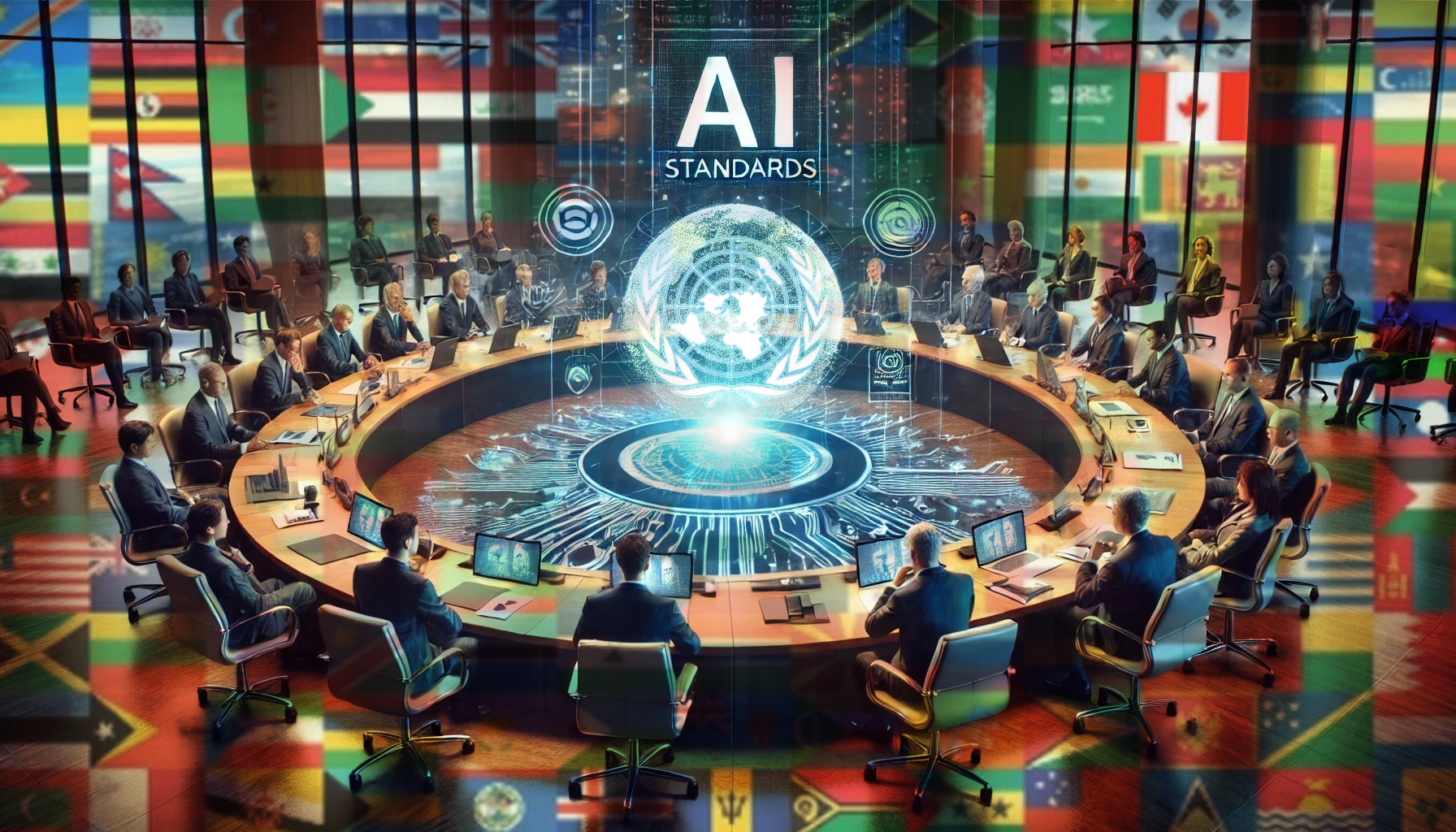
The landscape of artificial intelligence (AI) and machine learning (ML) development is shaped by a diverse array of international organizations, each contributing to the advancement and standardization of these technologies. From industry consortia to intergovernmental bodies , these organizations play crucial roles in benchmarking, policy-making, and ethical governance of AI systems worldwide.
AI Standards Organizations:
Several international organizations are actively involved in developing standards for AI and ML technologies. The International Organization for Standardization (ISO) and the International Electrotechnical Commission (IEC) have jointly established a subcommittee (ISO/IEC JTC 1/SC 42) dedicated to AI standardization, covering areas such as terminology, governance, and technical specifications. The Institute of Electrical and Electronics Engineers (IEEE) also contributes significantly to AI standards through its Global Initiative on Ethics of Autonomous and Intelligent Systems. Additionally, the European Committee for Standardization (CEN) and the European Committee for Electrotechnical Standardization (CENELEC) have formed a joint technical committee (CEN/CENELEC JTC 21) to develop AI standards for the European market. These organizations work collaboratively to ensure that global AI systems are ethically sound, robust, and trustworthy, while promoting interoperability and harmonization across different sectors and applications.




Key Aspects of ISO/IEC JTC 1/ – SC 42
- Establishment: SC 42 was established at the 32nd ISO/IEC JTC 1 Plenary in Vladivostok, Russia, with Mr. Wael William Diab appointed as Chair and Ms. Heather Benko as Committee Manager.
- Scope: The committee serves as the focal point for JTC 1’s standardization program on AI, providing guidance to other ISO and IEC committees developing AI applications.
- Structure: SC 42 is composed of five working groups:
- Collaborations: SC 42 collaborates with various ISO and IEC committees, as well as external organizations such as IEEE, ITU, and OGC, to ensure comprehensive standardization across different sectors and technologies.
- Standards and Workshops: The committee has published several standards and organizes bi-annual AI workshops to discuss emerging trends, technology, requirements, and applications in AI.
Public Resources
- Committee Page: https://www.iso.org/committee/6794475.html
- ISO/IEC AI Workshop Series Page: https://jtc1info.org/technology/subcommittees/ai/workshops/
- LinkedIn Page: https://www.linkedin.com/company/iso-iec-jtc-1-sc-42-artificial-intelligence/[1].
Key Aspects of CEN-CENELEC – JTC 21
Establishment
- The CEN-CENELEC Joint Technical Committee on Artificial Intelligence (JTC 21) was established to standardize artificial intelligence (AI) systems, ensuring they are trustworthy and respect fundamental values and human rights recognized in Europe.
Here is the launch announcement: https://www.cencenelec.eu/news-and-events/news/2021/briefnews/2021-03-03-new-joint-tc-on-artificial-intelligence/
- Scope: JTC 21 focuses on producing standardization deliverables in the field of AI and related use of data to address European market and societal needs, underpinning EU legislation, policies, principles, and values. It will take direction from SC 42 and adapt it to European market and societal needs, as well as underpinning EU legislation, policies, principles, and values..
- Structure: The committee is composed of 96 experts from 12 countries, nominated through their national standardization organization, and includes a delegation from the European Commission.
- Collaborations: JTC 21 collaborates with other CEN and CENELEC committees whose sectors are impacted by AI and considers the adoption of relevant international standards. It also works closely with organizations like BDVA/DAIRO to support ongoing standardization activities and coordinate the development of an AI standardization roadmap.
- Standards and Work Program:
- JTC 21 is developing several standards, including:
- prEN ISO/IEC 23282: Evaluation methods for accurate natural language processing systems.
- prEN ISO/IEC 42001: Information technology – Artificial intelligence – Management system.
- prEN ISO/IEC 8183: Information technology – Artificial intelligence – Data life cycle framework.
- prEN XXX: Competence Requirements for AI ethicists professionals (preliminary work item).
- prEN XXX: AI system logging (preliminary work item).
- prEN XXX: Data terms measures and bias requirements (preliminary work item).
- Harmonized Standards: JTC 21 aims to produce harmonized standards that comply with EU legislation requirements, ensuring clear scope, objectively verifiable requirements, risk assessment, and neutrality principle.
Official Websites and Documents
- CEN-CENELEC Website: https://www.cencenelec.eu/areas-of-work/cen-cenelec-topics/artificial-intelligence/
- Work Programme Document: https://airise.eu/ecosystem/standards-training/work-in-progress
- Harmonized Standards Webinar: https://www.cencenelec.eu/media/CEN-CENELEC/AreasOfWork/CEN-CENELEC_Topics/Artificial%20Intelligence/jtc-21-harmonized-standards-webinar_for-website.pdf
- Business Plan: https://standards.cencenelec.eu/BPCEN/2916257.pdf
- Work Programme 2023: https://www.cencenelec.eu/media/CEN-CENELEC/News/Publications/2023/workprog2023.pdf
External Resources
- Joinup.eu – European Union: https://joinup.ec.europa.eu/collection/rolling-plan-ict-standardisation/artificial-intelligence-0

Key Aspects of NIST
Establishment
NIST was established in 1901 as the National Bureau of Standards (NBS) and renamed in 1988. It is part of the U.S. Department of Commerce.
Scope
NIST’s mission is to promote U.S. innovation and industrial competitiveness by advancing measurement science, standards, and technology, with a growing focus on Artificial Intelligence (AI).
Structure
NIST is structured into laboratory programs, including the Information Technology Laboratory (ITL), which focuses on AI, cybersecurity, and data science.
Collaboration
NIST collaborates with industry, academia, and government agencies on AI research, providing user facilities, research partnerships, and extramural funding.
Standards and Workshops
NIST develops standards for AI, including the AI Risk Management Framework, and hosts workshops on AI topics, such as Explainable AI (XAI) and AI for Cybersecurity.
AI Initiatives
NIST’s AI initiatives include:
- Developing standards for AI systems
- Researching AI for cybersecurity and privacy
- Creating frameworks for AI risk management
- Hosting workshops on AI topics
AI Applications
NIST applies AI to various areas, including:
- Cybersecurity: using AI for threat detection and response
- Healthcare: developing AI for medical imaging and diagnostics
- Manufacturing: applying AI for predictive maintenance and quality control
Engineering:

Key Aspects of MLCommons
MLCommons is an open AI engineering consortium dedicated to improving AI systems through collective efforts with industry and academia. The organization operates on five key principles:
- 1. Grow AI Markets: MLCommons aims to expand AI markets and enhance global welfare by being inclusive and fair, involving a diverse group of stakeholders, and maintaining openness with intellectual property.
- 2. Collaborative Engineering: The consortium emphasizes technical leadership, data-driven decisions, and simplicity in design to create real user value.
- 3. Consensus-Driven Decisions: MLCommons supports rapid development and consensus-supported decisions, facilitating easy technical contributions.
- 4. Community Building: The organization fosters a welcoming and rewarding community for contributors and celebrates achievements collectively.
- 5. Mission: MLCommons seeks to accelerate AI innovation and maximize its positive societal impact by democratizing machine learning through open benchmarks and datasets.
Leadership and History
- Leadership: The board of directors consists of representatives from the MLCommons community, providing strategic guidance and transparency.
- History: Founded in 2018, MLCommons launched the MLPerf Training benchmark suite and has since been a pivotal player in AI benchmarking.
Contact Information
- Email: support@mlcommons.org
Public Resources
- Website: MLCommons provides extensive resources on its website, including information on joining working groups and accessing benchmarks and datasets. https://mlcommons.org/about-us/
- GitHub: The MLCommons GitHub repository hosts open-source projects and datasets, generally available under the Apache 2.0 license. https://github.com/mlcommons
- LinkedIn: MLCommons maintains a LinkedIn page for updates and community engagement. https://www.linkedin.com/company/mlcommons
These are some of the main ones globally, but there are many others that influence regulations in specific regions. Countries, provinces, states, etc., generally do not create their own specific regulations, but may implement subsets of the global standards. In another post, I will talk about the regional and industry specific regulations for Canada and the United States. The key aspects of these regional regulations relate to where AI is used, the transparency to others that use these systems intentionally or non-intentionally, and the security of these. AI security is a pretty vast field, which again warrants its own focus post.



Discover more from Designing Risk in IT Infrastructure
Subscribe to get the latest posts sent to your email.
 Designing Risk in IT Infrastructure