How are countries addressing AI regulation around the world?
As the adoption of AI by both businesses and individuals grows increasingly widespread across the globe, governmental bodies are actively working to determine the appropriate regulations that need to be instituted.
The people over at Lewis Silken, have created this detailed world map on what regulations are being put in place across every country in the world. Have a look at their interactive PDF here..
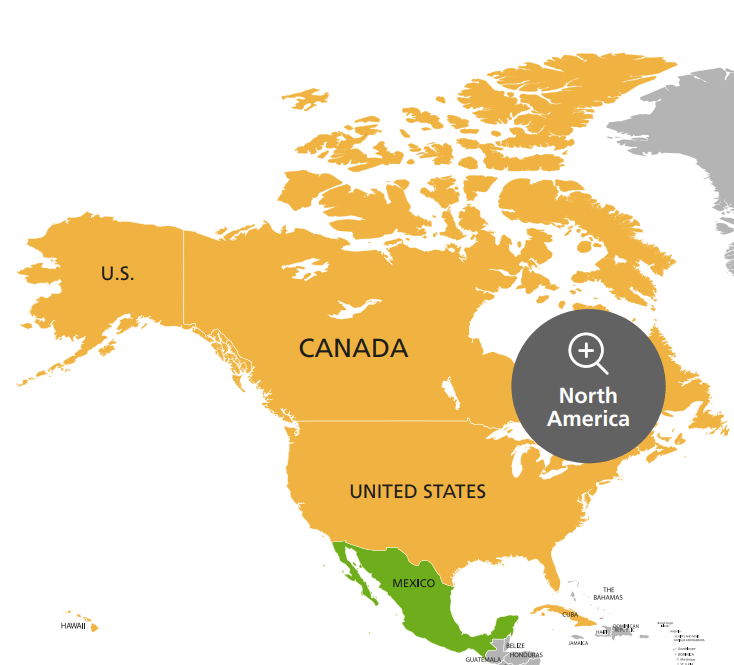
AI Regulations in North America
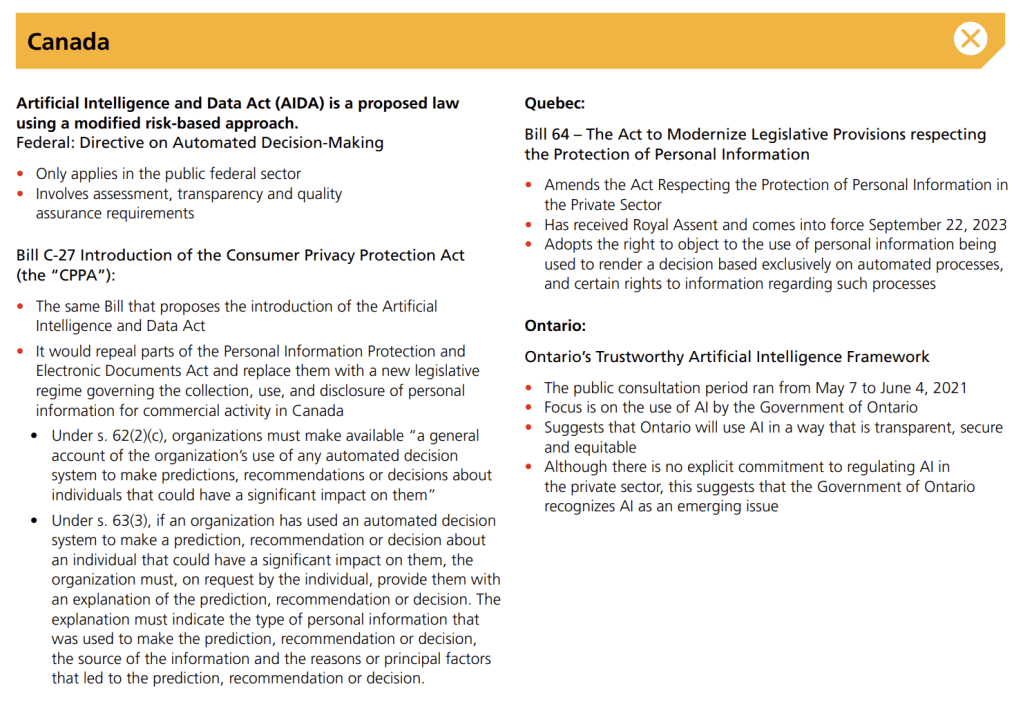
Canada
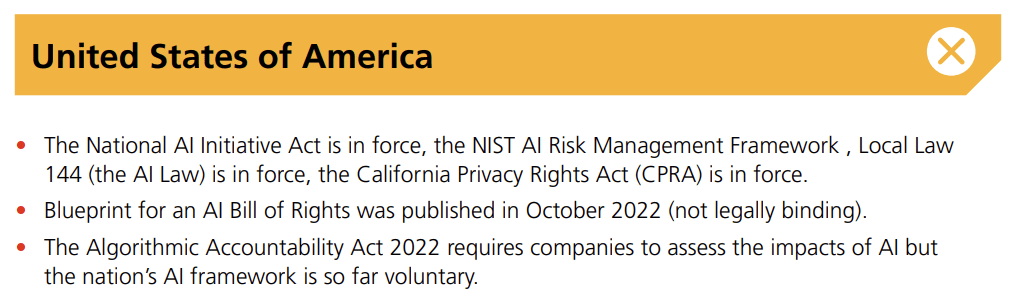
United States
Mexico
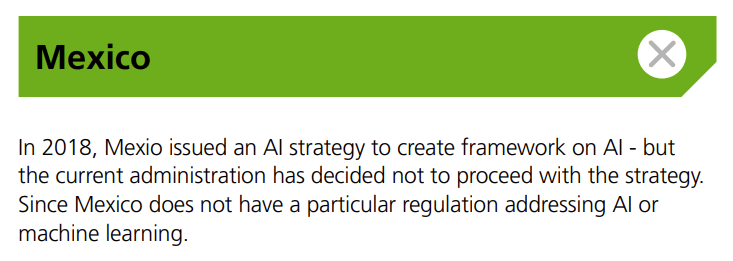
With most countries still finding artificial intelligence laws and regulations to be a novel concept, there is no consistency or inclusiveness in the existing rule framework. The clear necessity for rules that address both the positive and negative impacts of AI across sectors calls for a consensus.
Regulatory Initiatives
Concerns regarding potential misuse or unintended consequences of AI have prompted investigations and efforts to create standardized regulations.
AI Laws and Their Impact
AI is already improving healthcare, fostering new connections, and substantially boosting productivity. However, when mishandled or used irresponsibly, it may lead to job loss, biased results, and more.
AI Regulations Across Major Countries: EU, CA, US, UK, China, and India
The debate over specific laws and regulations governing AI is still active. Scientists emphasize the need for rules for deep learning models to avert unnecessary harm, and this area is still under discussion.
The Need for AI Regulation
Many AI experts and policymakers are in agreement that a clear regulatory framework will soon be essential, considering the constant growth in computing power, the emergence of AI startups, and the exponential increase in data collection by companies.
Environmental Considerations
The ecological implications of AI also stress the importance of regulations to ensure sustainability.
Existing National Regulations
Several nations have already laid down rules regarding data usage and collection, even though they may be vague at times. Governments often work with major companies to determine AI regulation.
Understanding AI Operation
Legal regulations also dictate that AI should be explainable, as many machine learning and deep learning models operate in a non-transparent manner. This obscurity can lead organizations to overlook biases in model decisions.
Legal Challenges in AI
Companies utilizing personal information for AI may face challenges in adhering to international data protection laws. Most countries have laws governing the collection, use, processing, disclosure, and safeguarding of personal data, including restrictions on cross-border transfers.
Objectives of Data Protection Laws
- Reducing the amount of personal data held by an organization.
- Meeting individual expectations for personal information handling.
- Ensuring data accuracy in line with organizational processing objectives.
- Making organizations accountable for data protection abuses.
Importance of Laws and Regulations in AI
AI Needs Regulation
AI needs regulation for two main reasons. Firstly, AI-driven decisions have a major impact on daily life. Inaccurate or biased algorithms can have disastrous consequences. Secondly, the accountability in decision-making ensures adherence to human rights law and offers recourse for harm.
The Unintended Consequences of AI
There have been instances where AI has led to unforeseen consequences, such as biased credit limits, incorrect academic grading, and avoidance of liability in accidents. These highlight the importance of artificial intelligence laws and regulations.
Worldwide AI Regulations in 2022
The recent history has seen countries gearing up to establish AI laws and regulations, with significant developments expected in 2022.
AI Regulations Across the Globe
Since 2017, over 60 countries have implemented AI laws, nearly paralleling the pace of AI integration. The growth in AI governance raises concerns about potential barriers to international collaboration, emphasizing the importance of legislation on global markets.
About the author

With 25 years of industry experience, Daemon Behr is a seasoned expert, having served global financial institutions, large enterprises, and government bodies. As an educator at BCIT and UBC, speaker at various notable events, and author of multiple books on infrastructure design and security, Behr has widely shared his expertise. He maintains a dedicated website on these subjects, hosts the Canadian Cybersecurity Podcast, and founded the non-profit Canadian Cyber Auxiliary, providing pro bono security services to small businesses and the public sector. His career encapsulates significant contributions to the IT and Cybersecurity community.
Other recent articles of note.







Discover more from Designing Risk in IT Infrastructure
Subscribe to get the latest posts sent to your email.
 Designing Risk in IT Infrastructure